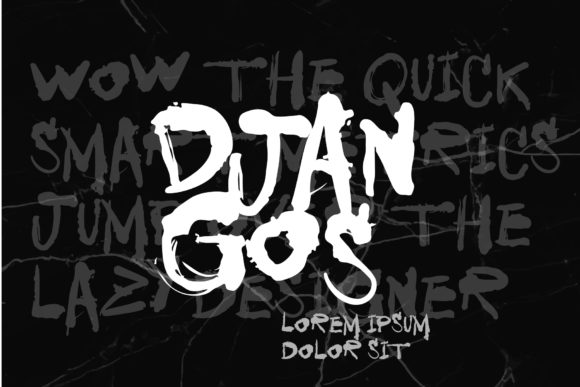
Djangos: Unleashing Creative Energy with a Bold Display Typeface
You know that feeling when you stumble across a visual element that just clicks? It’s not just a tool; it’s a spark. For designers, small business owners, and content creators alike, finding a typeface that carries its own distinct personality is like finding a secret weapon. Enter Djangos, an incredibly unique and interesting looking display font. Have fun with this beautiful font and explore its endless variations. It’s the kind of design asset that doesn’t just sit on the page; it demands attention, making it a fantastic choice for anyone looking to inject a dose of creativity and flair into their visual communication.
A Typeface with Attitude and Flow
So, what exactly is it that makes Djangos stand out in a sea of available typefaces? At its core, Djangos is a premium font designed for impact. It often features a blend of stylistic elements that might include elegant swashes, flowing connections reminiscent of script fonts, or bold, architectural forms found in modern display type. Its strength lies in its versatility within its own aesthetic—it can feel both vintage and contemporary, playful yet sophisticated. This duality makes it a powerful piece of modern typography that can adapt to various creative visions. Whether you're working on a logo design for a boutique brand or crafting headlines for an editorial layout, the font's inherent character does much of the heavy lifting, helping you achieve a professional and memorable presentation from the start.
Where Creativity Meets Commerce: Practical Applications
The true value of any creative font is measured by how it performs in the real world. Djangos shines across a broad spectrum of projects, bridging the gap between artistic expression and commercial need.
- Branding and Identity: For businesses in the lifestyle, beauty, food, or artisanal sectors, Djangos can form the cornerstone of a brand identity. Its distinctive style helps with instant brand recognition, setting a tone that feels curated and intentional.
- Packaging and Product Design: Imagine this typeface on coffee bags, cosmetic labels, or specialty goods. Its visual appeal can elevate shelf presence, making a product look more desirable and helping it stand out in a competitive market.
- Digital Presence: In the fast-scrolling world of social media, a striking font is invaluable. Use Djangos for Instagram graphics, Pinterest pins, or YouTube thumbnails to stop thumbs and boost engagement. On a website, it can serve as a captivating hero headline, immediately communicating your site's vibe to visitors.
- Marketing and Print Assets: From event posters and flyer designs to email headers and marketing assets, this font adds a layer of polish. It’s particularly effective for invitations to launches, sales, or special events, where you want to generate excitement.
- Merchandise and Digital Products: If you sell t-shirts, mugs, or digital downloads like planners or wall art, a unique typeface like Djangos can become a signature style for your product line, increasing its perceived value.
Making it Work: Pairing and Readability
While a display font like Djangos is fantastic for headlines and focal points, practical design requires balance. A key piece of advice is to think about font pairing. Because Djangos has such a strong personality, it often works best when paired with a clean, neutral sans serif font or a simple serif font for body copy. This contrast ensures that your main message pops without sacrificing overall readability. For example, a bold, stylish headline in Djangos followed by a paragraph in a font like Montserrat or Lora creates a clear visual hierarchy that guides the reader's eye comfortably through the content.
Always test your pairings in context. How does the headline look next to the body text on a mobile screen? Does the combination feel harmonious or chaotic? The goal is to use Djangos to capture interest and then let a more subdued typeface deliver the detailed information. This approach improves the professional presentation of any layout, ensuring that style never comes at the expense of clarity.
Choosing Your Style and Licensing
Many premium typefaces like Djangos come with multiple styles—perhaps different weights, stylistic alternates, or swash variations. Before you start a project, take a moment to review all the included font styles. You might find that a lighter weight is perfect for elegant subtitles, while a bolder version is ideal for impactful call-to-action buttons.
Finally, a crucial step for any commercial project is understanding the licensing. If you're using the font for client work, merchandise for sale, or widespread digital distribution, you need to ensure you have the correct commercial font license. This isn't just a legal formality; it's a mark of professionalism that supports the type designers who create these valuable design assets. Always check the license terms to see what’s covered, whether it's for a single user, a team, or for embedding on websites.
Ultimately, a typeface like Djangos is more than just letters on a screen. It's a creative partner that can help you articulate a vision, build a brand's visual language, and connect with your audience on an aesthetic level. By thoughtfully applying its unique style, matching it with complementary fonts, and using it in the right contexts, you can harness its power to make every project more engaging, cohesive, and unmistakably yours.